
"Your mind is like this water, my friend. When it is agitated, it becomes difficult to see. But if you allow it to settle, the answer becomes clear."
- Master Oogway
Oogway makes it sound easy. It isn't. We assume meditation brings calm. We are sold meditation as a cure-all, but meditation is not for calm. It might bring calm to some, but that's not what it's about. Why do I say this? Because I constantly come across people who say, "I cannot concentrate," or "I cannot sit in one place," or "I find it difficult." That is what meditation does.
Meditation is difficult, though some may find it easy. The first difficulty is this: when you sit quietly, away from the noise of the world, you begin to see yourself, hear yourself and feel everything that had been numbed. This is the hard part. Because we don't enjoy seeing and addressing the uncomfortable parts of our being. Parts that are us. The truth within us.
The second difficulty is the discomfort. Pains begin in places we never knew we had. We want the recliner chair, but meditation is a cold floor. I'm not saying meditation cannot be done in a comfortable chair, but it is meant to be uncomfortable, more so when we begin. The idea is to accept the discomfort and, most importantly, ourselves. They are both the same. Some days it will flow. But even for people who find it easy, there will be hard days.
Gautama, when he became the Buddha, realised that life is about dukkha, call it sadness, suffering or difficulty. Yet we, mere mortals, are sold happiness and constant joy that can supposedly be purchased by travelling around the world, eating tasty food or getting a fancy car. The question is, can it really? Little hits of dopamine won't rid us of this suffering. Meditation does.
We associate meditation with sitting in silence and observing the breath, or chanting, or just being. That's only one way. The most common is breath awareness. Some use a mantra, like Transcendental Meditation. Walking meditation is common in Zen and Theravada Buddhism, where you are mindful of each and every step. Tai Chi, Qi Gong and even yoga, through slow movement coordinated with breath and intention, can take you into a meditative state.
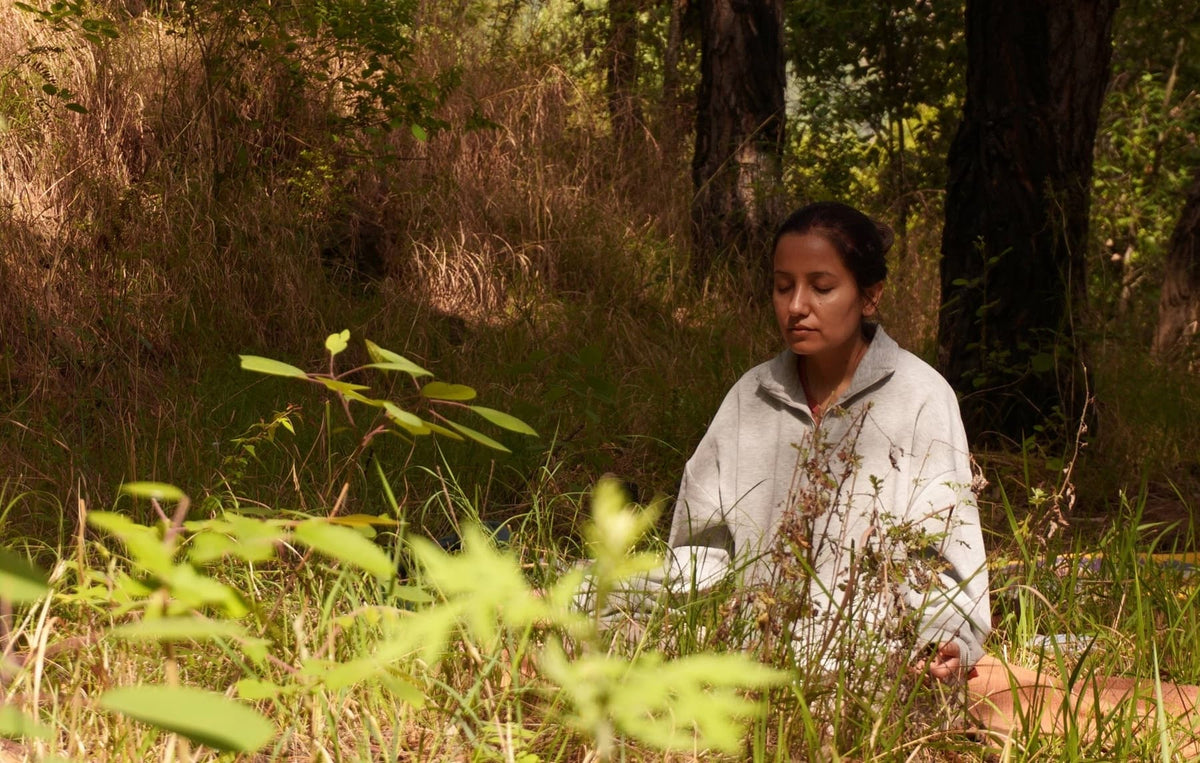
There is no single way that works for everyone, which is why I don't like to say "sit" when I talk about meditation. I know a yoga guide who couldn't meditate sitting. She tried for years and wasn't able to. She eventually found her way in the silence of a forest. I can attest to how powerful a forest can be for mental wellbeing. Being in a forest is meditation.
I think of meditation in two parts: the practice and you.
The practice
Kobe Bryant, the basketball player, was known to practice till he dropped. That practice could be meditation. Beyond that, he still took 15 minutes every morning to sit in silence, close his eyes and meditate. The first is the practice. The second is you.
I still temper the cacao we make at Oona, and for me it is a meditative process. A few minutes of absolute silence, when the liquid cacao is warmed, poured on the table and agitated till it cools down. Then it is poured back into the main container and warmed up again. Today it's muscle memory. Where each element goes, how the temperature is gauged, when to keep stirring, when to pour it back. It just happens fluidly, without me having to check, the way I would have when I had just begun.
It's like a Hindustani or Carnatic musician doing riyaz, the daily practice. The same scale, the same note, the same phrase, over and over. Thousands and thousands of repetitions. When you begin, it is practice. Eventually the practice disappears and the music just flows.
The same applies to martial artists, dancers, athletes, writers, actors and literally anyone who puts in the practice to get better at something every single day. A cricketer playing the same shot 500 times is meditating. Even someone who struggled with trigonometry in school can get good at it with practice.
One important distinction needs to be made here: shooting hoops isn't automatically meditation. Mindlessly shooting while thinking about your phone or an argument is just exercise. It becomes meditation when attention is deliberately gathered and held.
Beyond all the above, there are other physical practices that are meditative. Knitting, pottery, woodworking, gardening or simply washing dishes. Here in Ranikhet, where I live, you constantly see women walking and knitting at the same time. Repetitive work done with the right mindset is meditative. There are days when I turn on some soft music and wash dishes.
The Japanese treat skilled activities like calligraphy, archery, cooking and chado (the way of tea, often called the tea ceremony in the Western world) as meditative practice. Cacao making, like chado, is in itself a mindful activity. Those few minutes of heating the water, chopping the cacao and whisking it into a great cacao drink are meditation. It brings focus back to the activity itself. It is the way of cacao.
Whoever you are, whatever you do, always practice with full attention. Deep, mindful practice. It is meditation.
You
Beyond the practice, beyond the work, beyond the world we live in, there is you. When you sit down to meditate, there is no one and nothing else, just you. This is where you become aware of yourself and everything you are. For a cricketer there is no ball or stadium, just the human. In that moment, our designations, our fame and everything else simply dissolve. You are just you, sitting as yourself.
Sometimes you might relive the feeling without actually being there. You see how the body is feeling. You hear how the mind reacts to various thoughts and pains. In the initial moments, your mind is flooded with thoughts. You notice not just the thoughts but also how you feel. You become more aware of everything around you. Sometimes the thoughts become too much. Your body hurts too. The longer you sit, the more you begin to see. These moments also unveil uncomfortable or unresolved emotions. Breathe through it.
Meditation for even 10 minutes beyond the practice gives the mind the pause it needs to recover. It takes the pressure of the activity away and refocuses you on your body and mind. It helps with emotional regulation and composure. Give yourself those 10 minutes.
Both the practice and you are fluid. They exist within each other and complement each other. You might just do the practice, or you might need both. I have separated them because most people do not have repeatable work like a cricketer might. Someone running a business has to take care of everything, everywhere, all at once. The idea is to figure out what works for you and do it.
And if you'd like a little help settling in, make yourself a cup of cacao before you meditate. When used consciously, cacao can help elevate the meditation and help you reach a state of oneness. The state of Oona.
What changed me
My way of meditation is Zen. I choose it for one reason: it doesn't rely on an anchor, be it a chant, a sound or a physical thing like a mala. Some may need a community. Some may need a guide. For me, it is simply about observing everything. The thoughts, the breath, how your body reacts, and then going back to simply breathing. It is a personal choice of mine not to rely on an anchor beyond myself, because I feel it creates a reliance on something external, without which I might not be able to meditate.
Another approach that aligned with me was self-inquiry. Something like what Ramana Maharshi prescribed, constantly asking "Who am I?", helped me gain a lot of perspective. Impermanence and the realisation of death are what changed me as a person. Questioning my morals and my actions, and analysing them, helped me gain a lot of awareness about who I am.
Back in my 20s, I used to read about Steve Jobs looking into the mirror every day and asking "Would I do what I am about to do today if I was to die tomorrow?" I never understood how to actually do that. The realisation dawned on me when I found out that a friend's two-and-a-half-year-old son had passed away of cancer. It shook me to the core, and that's when I understood what that question really asks of you. I consider it a life-defining moment, when everything changed for me.
Why meditate?
Recently I was watching Chef's Table: Noodles on Netflix. There's a scene that touched me (Episode 1, 19:22). Evan Funke is hand-rolling pasta. These are his words:
"I fell into this rhythm of waking up, making pasta as much as possible. And I kept making dough after dough after dough after dough seeking out the rhythm of how to do it. One day, I start working the sfoglia (the sheet of fresh pasta dough), and there's no hesitation. It felt natural for the first time. It was talking to me in a way that I could understand, finally. We were actually having a conversation. I was in awe of what was going on. Okay I guess this is happening now. It was fresh and thin, strong and balanced, and in the end, it was perfect. It was that defining moment, 'This is whom I'm gonna be.'"
There's only one reason to meditate: for yourself. To see yourself. To know yourself. And sometimes to find yourself. It's not easy, but it needs to be done if you wish to see. We often hear people say, "I don't know what I want to do, where my path lies." The answer is always within you. You know if something is right or wrong for you. In Oona, your mind, body and soul are aligned, and the way to Oona is through meditation. So meditate, and find your way to Oona.
Share: